
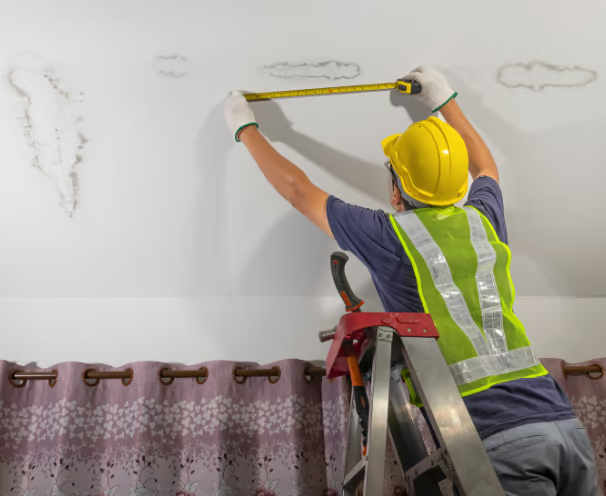
After a leak or flood, the visible water disappears long before the building is truly dry. Moisture lingers inside wall cavities, under flooring, and behind built-ins — exactly the dark, still, food-rich places mold likes best. Growth can start within 24 to 48 hours of wetting, but the signs often take days or weeks to reach the surface. Here are seven to watch for after any water damage event.
1. A musty smell that cleaning doesn't fix
The classic sign. A persistent earthy, musty odor — strongest when you first enter the house or open a closet or cabinet — usually means mold is growing somewhere nearby, even if you cannot see it. If the smell survives normal cleaning and airing out, the source is probably inside a wall, under a floor, or in the HVAC system.
2. Paint or drywall that bubbles, peels, or softens
Moisture trapped behind a wall pushes outward. Bubbling paint, peeling wallpaper, soft or spongy drywall, and baseboards that warp or separate from the wall all suggest the cavity behind them stayed wet — and what stays wet grows.
3. New stains or discoloration
Yellow, brown, green, or black spotting on ceilings, walls, or grout lines, especially spreading stains near the original leak area. Stains that keep returning after you clean and repaint them are a strong hint the moisture source behind the surface never dried.
4. Flooring that feels different underfoot
Laminate and vinyl that lift or click oddly, hardwood that cups or crowns, carpet that feels damp or smells sour days after the event — flooring assemblies trap water between layers, and the subfloor beneath is a prime hidden growth site.
5. Allergy-like symptoms that ease when you leave
Sneezing, congestion, itchy eyes, or headaches that are worse at home and better away can have many causes, and only a medical professional can sort out your health. But when symptoms start or worsen right after a water event, it is reasonable to have the building checked as part of the picture.
6. Condensation and humidity that won't settle
Windows that fog constantly, a basement that stays clammy, or indoor humidity that will not drop below about 60 percent even with a dehumidifier running suggests moisture is still evaporating out of building materials somewhere.
7. You can see growth in the usual suspects
Check the quiet places: under sinks, behind the washing machine, around the water heater, in the basement corners, and along the bottom of drywall near the original damage. Visible fuzzy or slimy patches in any color — white, green, black, orange — confirm the conditions were right, and where you can see some, there is often more you cannot.
What to do next
Small surface patches on tile or grout from everyday moisture are a normal cleaning chore. Post-water-damage mold is different: disturbing a large hidden colony without containment spreads spores through the house, and bleach on porous drywall treats the surface while the roots stay in the material. If the affected area is larger than a few square feet, if it is inside walls or flooring, or if anyone in the home has asthma or immune concerns, have it assessed professionally. A proper remediation starts with finding and fixing the moisture source, contains the work area, removes affected material, and verifies the structure is dry — in that order.
The rule of thumb after water damage: if it smells like mold, behaves like mold, or the building never truly dried, assume it needs a look. Catching hidden growth early is a small job. Catching it after a season inside your walls is not.