Most kitchen fires are small. A pan left on a burner, a towel too close to a flame — the fire itself may burn for only a few minutes and damage one corner of one room. Homeowners are often surprised to learn that the fire was the easy part. The restoration that follows is mostly about what the fire left behind: smoke, soot, odor, and the water used to put it out.
First: safety and securing the property
Before any cleanup, the home has to be safe to work in. That can mean confirming the fire is fully out (the fire department's job), checking that electrical and gas systems are safe, and watching for structural weakening around the burn area. If windows broke or the roof or an exterior wall was opened up, the property gets boarded up and secured — both against weather and against entry — before anything else happens.
The damage you can't see from the doorway
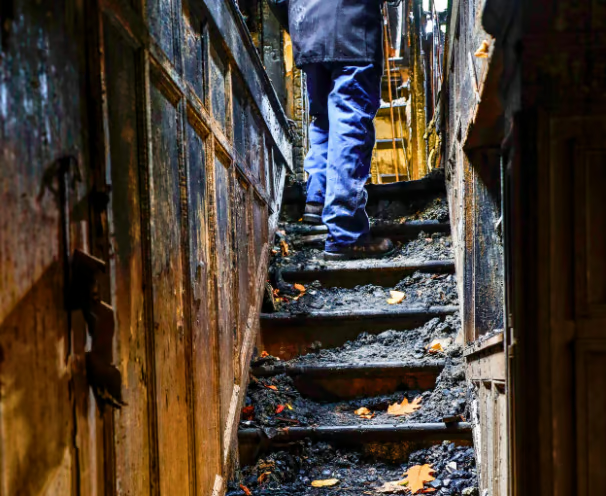
Smoke travels. Hot smoke rises and spreads through the whole house, pushing soot into bedrooms, closets, and closed cabinets on other floors. Soot is not just dirt: depending on what burned, it can be oily, acidic, and corrosive. Left sitting on metal fixtures, appliances, and electronics, it etches and pits surfaces within days. Protein fires — the classic kitchen scenario of burned food — leave a nearly invisible residue with an odor that is famously hard to remove.
Then there is the water. Firefighters and sprinkler systems do their job with volume, and the water that saved the kitchen can soak floors, walls, and the ceiling below. A fire job is almost always a water job too, and it needs drying on the same clock as any other water loss.
What the restoration process looks like
- Assessment and plan. The crew maps where smoke and soot traveled, tests surfaces to identify residue types, and separates what can be cleaned from what must be replaced.
- Debris and damaged material removal. Charred materials and unsalvageable items come out, documented for the insurance claim.
- Contents care. Belongings that can be saved may be packed out, cleaned off-site with specialized methods, deodorized, and stored until the home is ready.
- Soot and smoke cleaning. Walls, ceilings, and surfaces are cleaned with dry-chemical sponges and wet methods matched to the residue type, working from the most-affected areas outward. HVAC systems and ductwork are assessed too, since a contaminated system will re-spread odor every time it runs.
- Odor removal. After cleaning, lingering odor is treated with methods such as thermal fogging or ozone/hydroxyl treatment, and porous surfaces may be sealed before repainting so trapped odor cannot bleed back through.
- Repairs and restoration. Finally, the rebuild: drywall, paint, flooring, cabinetry — whatever the fire and the cleanup required — returning the kitchen to its pre-fire condition.
Why the clock matters
Soot's acidity means the first 24 to 72 hours decide how much can be saved. Plastics yellow, grout stains permanently, and metal finishes pit while residue sits. That is why fire restoration starts with a fast assessment even when the rebuild itself will take longer.
A note on doing it yourself
Wiping soot with household cleaners usually makes it worse — smearing residue deeper and setting stains, especially on painted surfaces. If you want to help, the useful jobs are documentation (photograph everything before it moves), retrieving essential documents and medications once the home is safe to enter, and keeping receipts. Leave the residue to the process above, and your kitchen — and the rest of the house — will come back cleaner for it.