
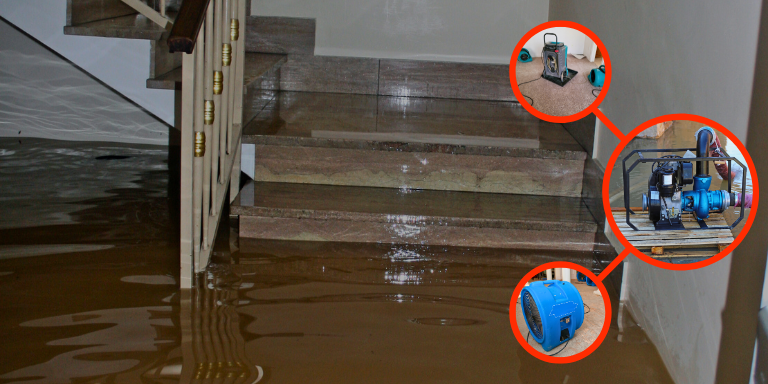
Minnesota winters are hard on plumbing. When temperatures dive below zero for days at a stretch, water inside a poorly insulated pipe can freeze, expand, and split the pipe open. The break often stays hidden until the thaw — and then water pours into walls, ceilings, and floors at several gallons a minute. What you do in the first hour decides whether you are dealing with a contained cleanup or a whole-house restoration.
Minute 0–5: Stop the water
Find your main water shutoff valve and close it. In most Minnesota homes it is in the basement, near the front wall where the water line enters, or beside the water meter. If the burst is on a single fixture line, the fixture's own valve may be enough — but when in doubt, shut off the whole house. Turn the valve clockwise until it stops. Every adult in the home should know where this valve is before winter, not during it.
Minute 5–15: Make it safe
Water and electricity are a dangerous mix. If water is near outlets, appliances, or your electrical panel, stay out of the area and switch off power to affected circuits at the breaker box — only if you can reach the panel without standing in water. Keep kids and pets out of the wet zone, and watch ceilings below the leak: a sagging, bulging ceiling is holding water weight and can come down.
Minute 15–30: Start removing water and protect what you can
- Move furniture, rugs, boxes, and electronics out of the wet area. Cardboard and upholstered items soak up water fast.
- Put aluminum foil or wood blocks under furniture legs that cannot be moved, to keep stain and rust from transferring to flooring.
- Mop, towel, or wet-vac up standing water. A standard wet/dry shop vacuum handles small volumes well.
- Open cabinet doors under sinks and closets on exterior walls to let warmer room air circulate.
- If the break is in a ceiling or wall, place buckets under active drips and resist the urge to poke holes — a controlled drain is better handled deliberately.
Minute 30–60: Document everything, then call
Before you throw anything away, photograph and video the damage: the broken pipe, every wet room, damaged belongings. Insurers and restoration crews both work better with a clear record, and photos taken in the first hour are the most honest evidence of what happened. Save receipts for anything you buy or rent for the cleanup.
Then make two calls: your insurance company to open a claim, and a restoration company to start extraction and drying. Speed matters because of what happens next — drywall and insulation can stay wet for days inside a wall cavity, and mold can begin growing on damp materials within 24 to 48 hours. Professional drying equipment is not just faster than box fans; it is measured, with moisture readings that confirm when a structure is actually dry.
The week after: preventing a repeat
Once the water is out, ask why the pipe froze. Common Minnesota culprits are pipes in uninsulated exterior walls, garden-hose spigots left connected, and heat that never reaches a crawl space or cabinet run. Pipe insulation sleeves, heat tape on vulnerable runs, and keeping the thermostat consistent during cold snaps are cheap insurance against doing this twice.
A burst pipe is stressful, but it is a well-understood problem. Stop the water, stay safe, document, and get drying started fast — that sequence protects both your home and your claim.